|
|
-Boletus Luridus- Lurid Bolete |
|

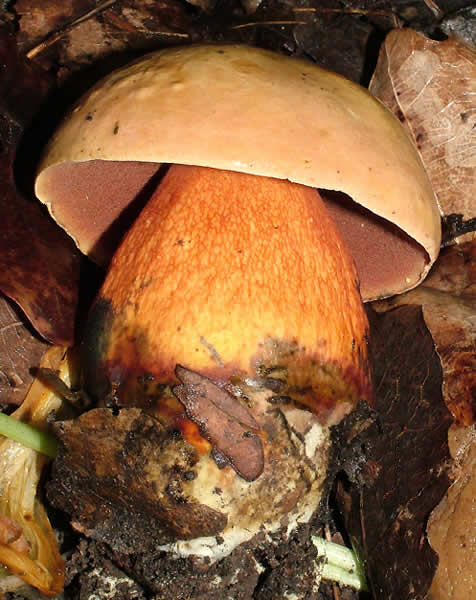
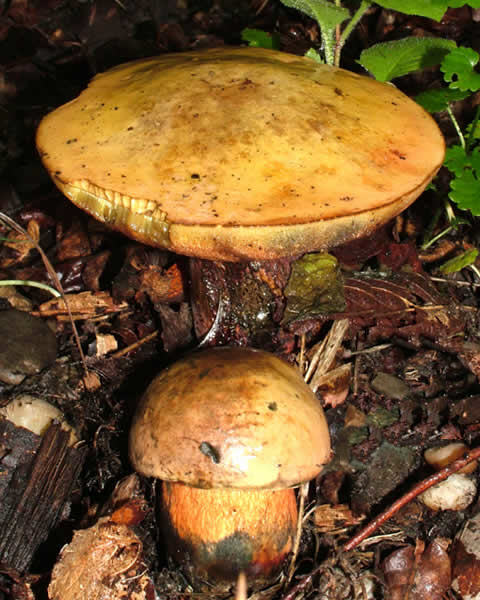
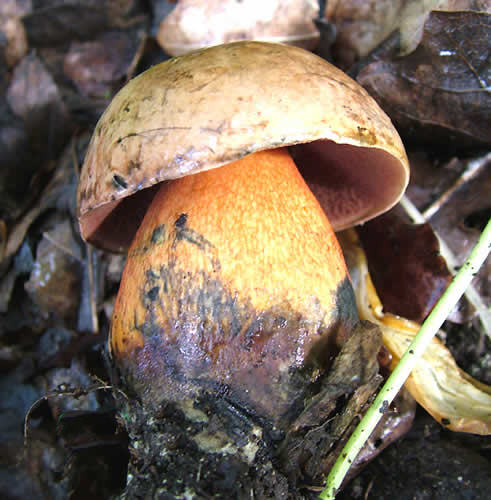
Boletus luridus is found under beech, lime and oak trees, mainly in areas of chalky soil. It is sometimes mistakenly identified as Boletus satanus; both of these species are poisonous.
|
Cap
:
Immature specimens, such as the one shown here, are downy and pale yellow. As the fruiting body matures, the cap, which expands to between 8 and 14 cm (exceptionally 20 cm) in diameter, becomes dull yellow-brown. The yellow cap flesh turns blue-black if it is cut or bruised. Beneath the cap, yellow spore tubes terminate in tiny circular pores that are at first yellow but eventually turn orange-red. Pores : At first yellow, soon red, paler orange-yellow to cap margin; turn blue when bruised. Tubes yellow, bruising blue when exposed, in age olive; cap context above tubes yellow; depressed at stipe; 10-30 mm long. Stipe : 1.5 to 4 cm in diameter and 5 to 10 cm tall, the swollen stem turns dark blue when cut and then fades back to a light blue colour, as seen here. The flesh near the base of the stem is deep yellow with red tinges. The surface of the stem is yellow, covered with a red mesh patterning everywhere except for the top of the stem, which remains yellow. |
|
Habitat
:
Most commonly found under beech trees on calcareous soil, this species is also occasionally seen beneath oak trees and limes. July to late October.
|