- The Spruce -


Introduction and Facts

Spruce refers to trees of the genus Picea. The word "spruce" derives from an obsolete term for Prussia.

Spruce is one of the most important woods for paper, as it has long wood fibres which bind together to make strong paper.

Spruces are also popular ornamental trees in horticulture, admired for their evergreen, symmetrical narrow-conic growth habit. For the same reason, some (particularly Picea abies and P. omorika) are also extensively used as Christmas trees. 

Spruce wood, often called whitewood, is used for many purposes, ranging from general construction work and crates to highly specialised uses in wooden aircraft and many musical instruments, including guitars, cellos, violins and the soundboard of pianos.

The resin was used in the manufacture of pitch in the past ; the scientific name Picea is generally thought to be derived from Latin pix, pitch (though other etymologies have been suggested).

In survival situations spruce needles can be directly ingested or boiled into a tea. This replaces large amounts of vitamin C. Water is also stored in a spruces needles providing an alternative means of hydration. Spruce can be used as a preventative measure for scurvy in an environment where meat is the only prominent food source

Maximum attainable ages are known for relatively few species. An age of 852 years recorded for P. Engelmannii is the current record for the genus.


ID Card

Description :

Large evergreen Conifer

Height : 80 to 150 feet (24-46 meters).

Trunk diameter : up to 5 feet (1.5 meters).

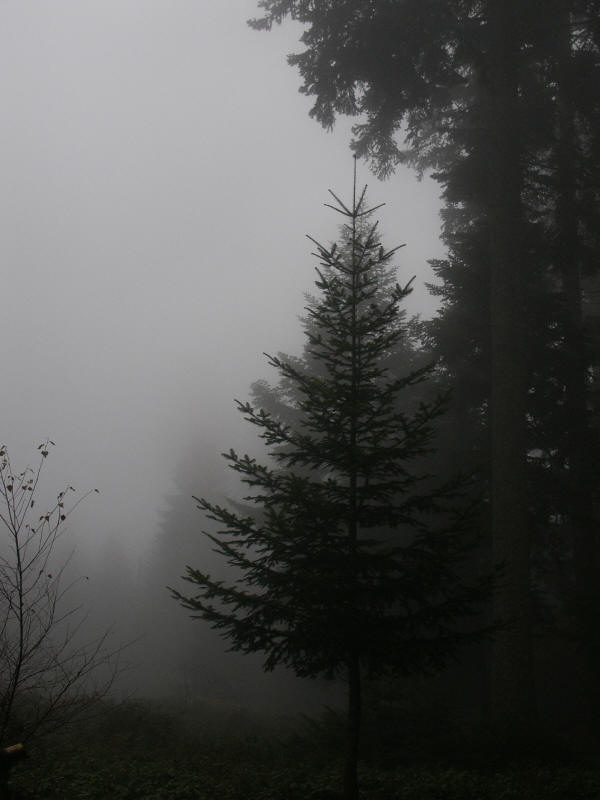
Appearance : the Spruce is the loftiest of European trees, with a spread of 20 feet (6 m), a straight, tapering stem, and sweeping branches disposed very regularly round it, giving it, with the long straight leading shoot, a very conical outline.

Location : there are around 45 species of spruces, all native to the cool temperate regions of Asia, Europe and North America. Almost half the known species are native to China.

   
Fruit :

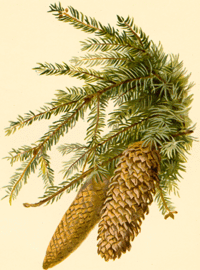
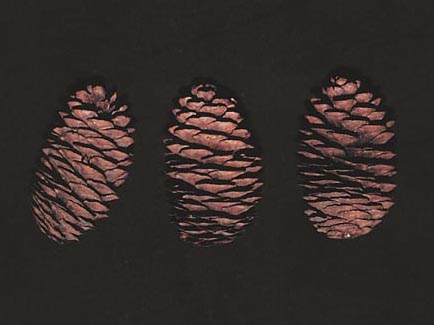
The cones are borne mainly at the ends of the upper branches, and in the flower stage stand erect, and vary in color, according to soil or situation, from green or yellow to pink, dark red, or purple. After fertilization they become pendant and green, taking the form of a pointed cylinder, from 5-7 inches long and from 1,5-2 inches broad. Their scales are thin, with their edges slightly curved inwards and notched at the top.

 In autumn the cones ripen to a rich and glossy brown hue; but it is not generally until the drying wind and warm sun of the following spring that they discharge their seeds.


Leaves :

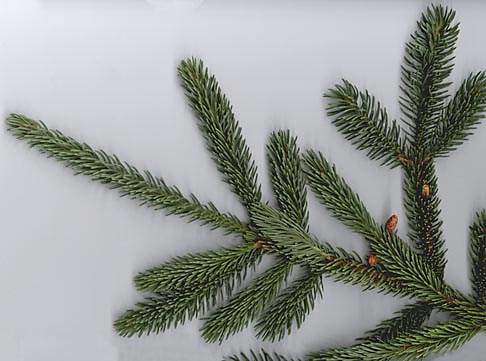
The grey green to blue green needles are about an inch long or a little less, and distinctly four-angled. They point forward and upward and are thickly set on the shoots, like a bottle brush.


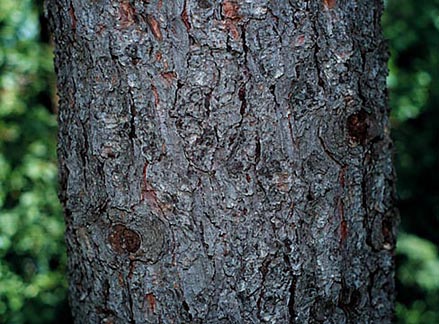
Bark :

The trunk bark is reddish brown to purplish and flakes off in thin plates. The bark on young shoots is orange brown.


Back